Most drawer boxes come standard with side-mounted, full-extension drawer glides that allow the drawer to open completely for easy access to its contents. These traditional glides require a gentle push to close, guiding the drawer manually back into the frame. For a more refined and effortless experience, soft-close glides provide a smooth, controlled motion that automatically pulls the drawer closed the rest of the way, preventing slamming and reducing wear on both the drawer and the frame. In this article, we’ll take a closer look at how to remove an undermount drawer box and explore some of the key features and benefits that set these glides apart from standard options.

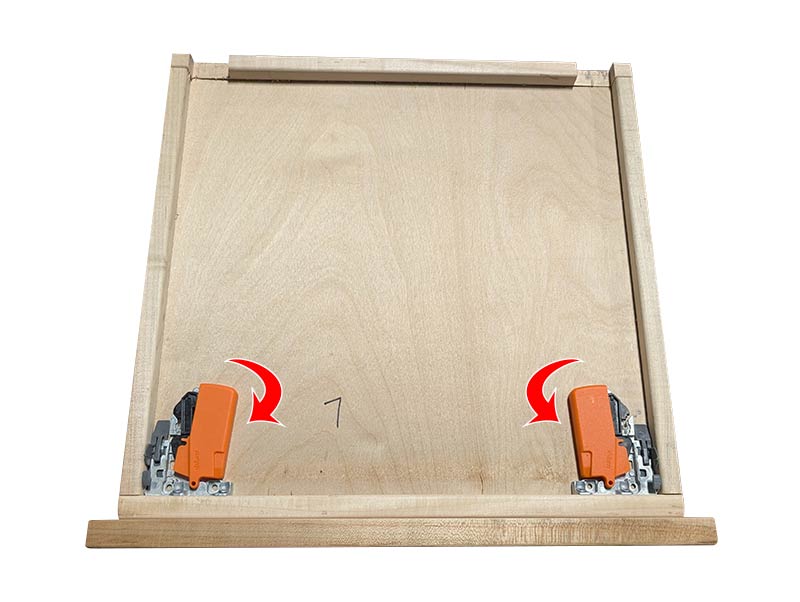
To remove the drawer box, start by locating the two orange release clips positioned underneath the drawer—one on each side near the front corners. Grip both orange levers firmly with your fingers and pull them toward you at the same time. This action releases the drawer box from the undermount glides, allowing you to gently lift and slide the drawer forward and out of the cabinet. Be sure to support the drawer with both hands as you remove it to prevent it from tipping or binding on the tracks.

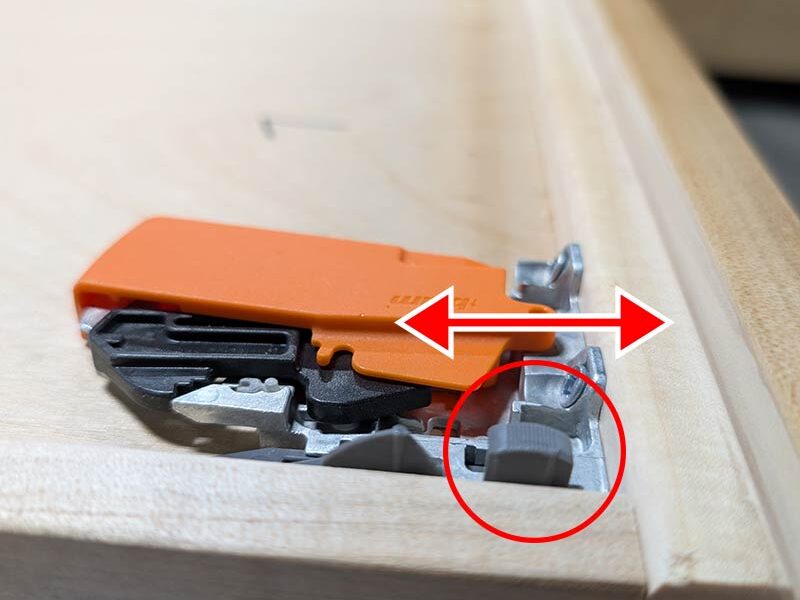
The gray adjustment pin shown near the front of the glide can be adjusted forward or backward to fine-tune the height on that side of the drawer. Adjustments in one direction raise the drawer slightly, while adjustments in the opposite way lower it. This step is especially important if your drawer isn’t closing all the way on its own. In many cases, the issue is caused by the drawer box rubbing or catching on part of the cabinet, which prevents the soft-close mechanism from fully engaging. By making small adjustments with the front pin on each side, you can level the drawer box and eliminate binding points, ensuring it glides smoothly and closes completely. Once aligned, the drawer front should sit evenly within the cabinet opening and line up perfectly with neighboring drawers or doors.

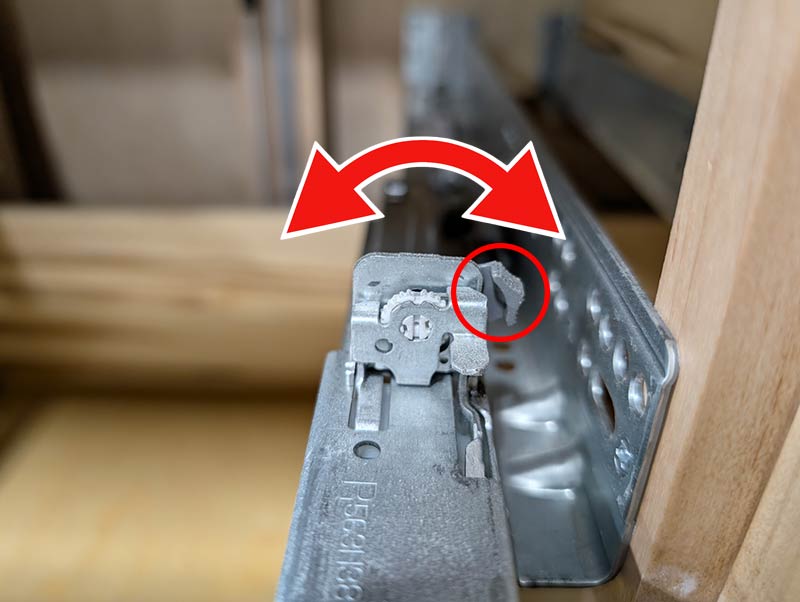
With the drawer box removed, you can access the rear adjustment wheel located at the back of the undermount glide. This small circular dial can be turned left or right to slightly pivot the entire glide, adjusting the drawer’s horizontal alignment within the cabinet. Adjusting this portion is not typically necessary in most situations, but it can be helpful if one side of the drawer sits unevenly or appears slightly out of level. Rotating the wheel in one direction will angle the drawer front to the left, while turning it the opposite way shifts it to the right. These fine adjustments help ensure the drawer front lines up evenly with surrounding drawers and doors, providing a clean, uniform appearance once reinstalled.

Properly adjusting and maintaining your undermount drawer glides ensures that your Amish furniture continues to operate as smoothly and reliably as the day it was built. Whether you’re fine-tuning a soft-close drawer, leveling a handcrafted drawer box, or correcting minor alignment issues, these simple steps help preserve the quality and longevity that define true Amish craftsmanship. Taking a few moments to make these adjustments not only improves daily function but also protects the timeless beauty and precision fit that make Amish-made furniture stand out for generations.

author-avatar

About David

David is a web designer by trade and is currently Amish Direct Furniture's web master. He enjoys working on side web projects and long walks on the beach.

Leave a Reply