Spooky
Savings
Save 15% off Dining and bedroom!
All in-stock furniture is 20% off!

When investing in high-quality, solid wood furniture, particularly pieces crafted by Amish artisans, you’re choosing a product built to last generations. The warmth, durability, and inherent beauty of solid wood are undeniable. However, like any natural material, wood is a living substance that responds to its environment. One common phenomenon that can occur with solid wood furniture, especially in pieces with center panels like doors and drawer fronts, is shrinkage. This can sometimes lead to small gaps appearing around the edges of these panels. While it might seem concerning at first, understanding why this happens and what to expect can help you appreciate the natural character of your Amish furniture even more.
At the heart of understanding center panel shrinkage lies the fundamental nature of wood itself. Wood is a hygroscopic material, meaning it absorbs and releases moisture from the surrounding air. This process is known as moisture exchange or wood movement.
Each piece is crafted using kiln dried lumber. This process rapidly removes moisture beyond what air drying achieves, resulting in wood that shrinks less and holds finishes better. However, wood will always move, there’s no stopping the change. Kiln dried wood does slow the rate of moisture uptake, but it does not eliminate it entirely.
Imagine a piece of lumber freshly cut from a tree. It contains a significant amount of water. As this lumber dries and is seasoned, much of this moisture is removed. However, it never reaches an absolute zero moisture content. The wood will always strive to reach equilibrium with the humidity levels of its environment. When the air is humid, wood will absorb moisture and expand. Conversely, when the air is dry, wood will release moisture and contract.
This expansion and contraction is a natural, inherent property of wood. It’s not a defect or a sign of poor quality; it’s simply the wood responding to changes in its surroundings. This movement is most pronounced along the grain of the wood. Think of it like a sponge – it swells when wet and shrinks when dry.
Provided by showplacecabinetry.com
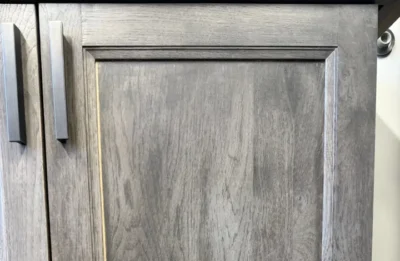
To grasp why center panels shrink, it’s essential to understand how they are typically constructed in high-quality Amish furniture. Many doors and drawer fronts on pieces like hutches, dressers, and cabinets feature a “frame and panel” construction. This involves a solid wood frame (stiles and rails) surrounding a solid wood center panel.
The center panel is often designed to “float” within the frame. This is a deliberate design choice by skilled Amish woodworkers. The frame pieces (stiles and rails) are typically joined together using techniques like mortise and tenon, which are incredibly strong and durable. The center panel is then fitted into grooves within the frame, but with a slight allowance for movement. This allowance is crucial because the wood will naturally expand and contract with changes in humidity.
If the center panel were rigidly fixed within the frame, it would be subjected to immense internal stress as it tried to expand or contract. Over time, this stress could lead to cracking, warping, or the joints of the frame failing. The floating panel design allows the wood to move freely, preventing these potentially damaging stresses.
The primary driver behind the visible shrinkage of center panels is fluctuating humidity levels. Here’s a breakdown of how it works:
This cycle of shrinking and expanding is a normal part of owning solid wood furniture. The goal of skilled Amish craftsmanship is to manage this movement in a way that preserves the integrity and beauty of the piece.

Provided by showplacecabinetry.com
The most common manifestation of this natural wood movement is the appearance of small gaps around the perimeter of the center panel. These gaps are most likely to be noticed during periods of low humidity.
Key things to understand about these gaps:
For example, when you consider a beautiful piece like the Normandy Amish Hutch, its solid wood construction means it will respond to its environment. The meticulously crafted frame and the floating center panel are designed to accommodate this natural movement, ensuring its longevity and beauty for years to come.
Beyond the general cycle of humidity, several other factors can influence how much your solid wood furniture moves:
As mentioned, different hardwoods have different properties. Some of the most popular hardwoods used in Amish furniture, like Oak, Maple, and Cherry, have varying degrees of stability. For instance, Quarter-sawn wood tends to be more stable than plain-sawn wood because the grain is oriented more vertically. When you select your wood, you are choosing not only aesthetic qualities but also inherent characteristics of how it will behave.
The quality of the drying and seasoning process is paramount. Reputable Amish furniture makers use carefully dried and acclimated lumber. This means the wood has been brought to a moisture content suitable for indoor furniture before construction begins. However, even perfectly dried wood will continue to exchange moisture with its surroundings.
This is where the skill of Amish furniture makers truly shines. Their understanding of wood movement leads to construction techniques that accommodate this natural behavior. The floating panel design is a prime example. Furthermore, the joinery used in the frames (like mortise and tenon) is incredibly strong and designed to withstand the stresses that might arise.
The more stable the humidity levels in your home, the less noticeable the wood movement will be. Homes with consistent humidity control (using humidifiers and dehumidifiers) will generally see less dramatic changes in their solid wood furniture.
While you can’t stop wood from moving, you can take steps to create a more stable environment for your furniture and minimize the visibility of shrinkage:
This is the most effective way to manage wood movement. Aim to keep the relative humidity in your home relatively consistent, ideally between 35% and 55%.
Rapid or extreme changes in temperature can also contribute to rapid moisture exchange in wood. Try to maintain a steady indoor temperature as much as possible.
Avoid placing solid wood furniture in areas with extreme humidity fluctuations, such as directly next to heating vents, fireplaces, or in bathrooms with high moisture levels. Similarly, avoid direct, prolonged sunlight, which can dry out wood unevenly.
Regular dusting with a soft, dry cloth helps prevent dust buildup that can trap moisture. When cleaning, use a slightly damp cloth and dry immediately. Avoid harsh chemical cleaners that can strip the finish and potentially affect the wood.
For furniture that is part of your daily life, like a dresser, consider the environment it’s in. A beautifully crafted piece like the Lexington 7 Drawer Dresser (072), made from solid American hardwoods, will benefit from a stable environment. While the drawer fronts might exhibit subtle movement, the quality of construction ensures they will continue to function smoothly and look beautiful.
It’s important to distinguish between normal wood movement and actual defects. You should generally not be concerned if:
You might consider contacting your furniture provider if:
In the vast majority of cases, what appears to be a “problem” is simply the natural behavior of solid wood. The skilled artisans at Amish Direct Furniture pride themselves on building furniture that not only looks stunning but is also structurally sound and designed to last. Their understanding of wood and their commitment to traditional building methods ensure that your furniture will age gracefully.
Owning solid wood furniture is an experience that connects you to nature and to the tradition of craftsmanship. The subtle shifts and changes that occur over time are part of its story. Instead of viewing shrinkage as a flaw, consider it a testament to the authenticity of your furniture.
This natural character is part of what makes Amish furniture so special. It offers a warmth and depth that mass-produced furniture simply cannot replicate. As highlighted in articles like “Why Mass-Produced Furniture Will Never Match Amish Warmth in Winter”, the inherent qualities of solid wood contribute significantly to the ambiance and feel of a home.
Ultimately, the beauty of your Amish furniture lies not just in its initial appearance but in its ability to evolve and endure. The subtle signs of wood movement are a reminder of the living material from which it was crafted and the skilled hands that shaped it. When you invest in pieces from Amish Direct Furniture, you are investing in quality, durability, and a timeless aesthetic that will be cherished for generations.
Whether you’re furnishing your dining room, your bedroom, or your living room, understanding the natural properties of solid wood will enhance your appreciation for the heirloom-quality pieces you bring into your home.